
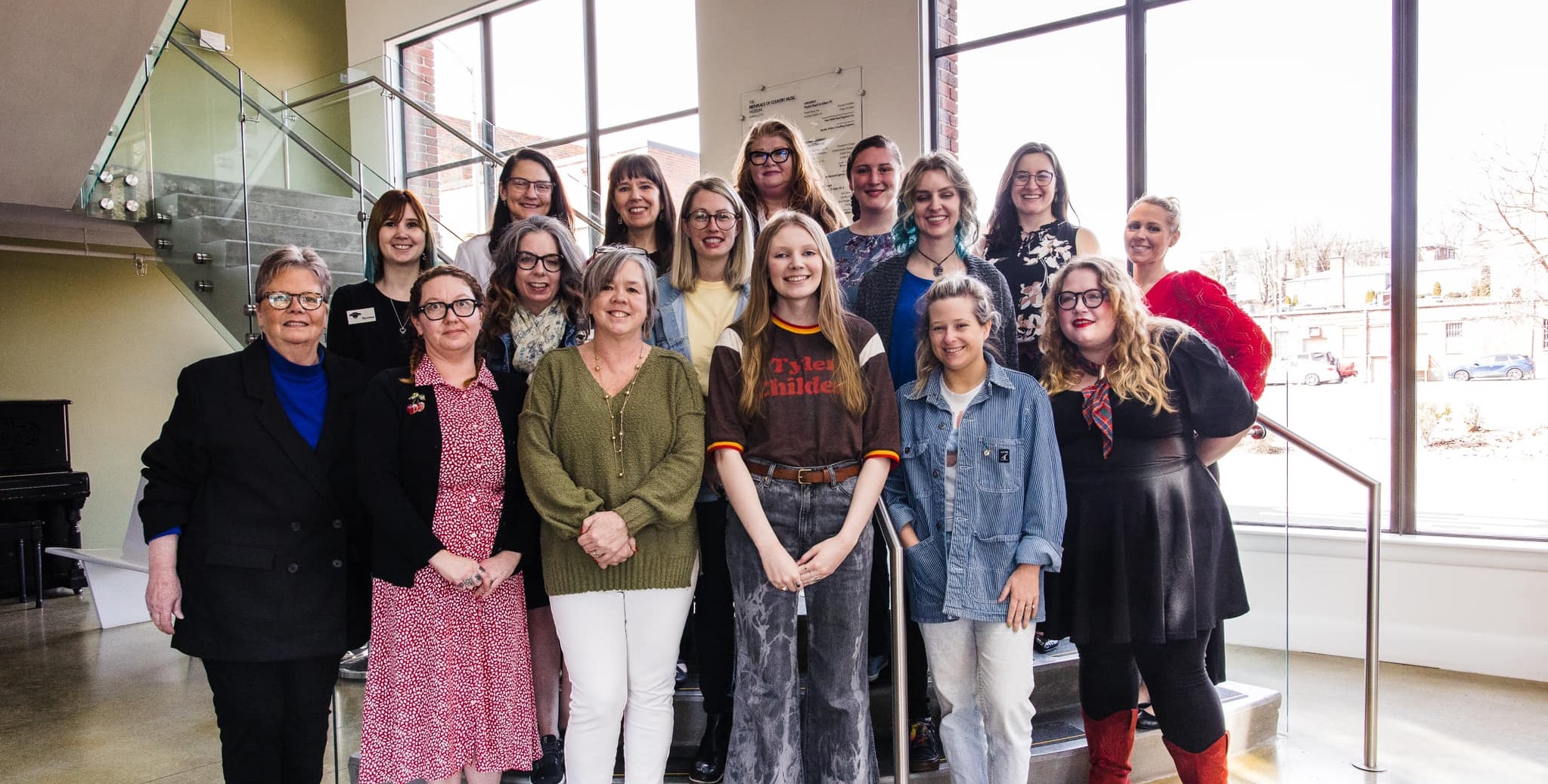
Last month was Women’s History Month, and instead of looking backward, we chose to look forward and celebrate some of the amazing women who are leading the way, making a difference, and making history at the Birthplace of Country Music. The Birthplace of Country Music’s staff is majority female. This is not so surprising when you consider that women make up about 60% of the overall museum field, but what is surprising is that all of our leadership positions are held by women!
Even though the world has come a long way toward diversifying hiring practices and more women are now able to get in the door, it can still be hard to find a seat at the table. In many industries today, leadership roles are still held by men. For example, in the festival and event industry, where women comprise 40% of the workforce, 80% of all management-level positions are held by men.
Last month, we interviewed some of the women in upper management roles at the Birthplace of Country Music and have been sharing those interviews on our social media channels throughout the month to celebrate these women. Now we have compiled all of those interviews into one convenient blog! Read on to learn more about Dr. René Rodgers, Head Curator; June Marshall, Museum Manager; Paula Hurt, Managing Director; Kathryn Long, Director of Administration; Baylor Hall, Director of Operations; Shauna Tilson, Director of Development; Leah Ross, Executive Director of Advancement; and Sarah Alexander, Director of Marketing.
What is your role in BCM, and how did you get there?
René: I am the Head Curator for the museum. I grew up in Bristol and knew the general story of the Bristol Sessions, but hadn’t dug deeper into this history. I went away to college and then on to graduate school in archaeology and a life in England for several years. And because I was a Rotary Ambassadorial scholarship winner my first year in the UK, I shared the story of Bristol’s country music connections to other Rotary clubs and groups while I was there. I moved back to Bristol at the end of 2011, right as the museum content development was ramping up, and in mid-2012 I was invited to be part of the content team, using my background in history, writing, and editing. I became the Associate Curator in 2013, followed by the Curator of Exhibits & Publications, and then finally Head Curator in 2018!
June: I am the Museum Manager. I began my employment on Frontline at the museum as a part time employee. As time went on, I was moved to full time. When our Museum Manager was moved to Operations, I was offered the position as manager before they reached outside BCM to look for someone. I accepted the position and have been here in that capacity ever since. That was about four years ago.
Paula: I am the Managing Director of the Birthplace of Country Music. I grew up in many different places as my father was a 20-year Marine so moving was the norm in our household. I graduated from East Tennessee State University with a Bachelor of Business Administration – I am a first-generation college graduate. I have worked in cash management at a local bank, purchasing for a Fortune 500 manufacturer as well as cash manager/accounts payable supervisor for a global glass manufacturer. I served as the Vice President of Finance and Administration for the Bristol Chamber of Commerce for many years – which developed my love of the Bristol Community and the tourism industry. During this time, I was able to watch the evolution of the Birthplace of Country Music from the receipt of the designation by Congress, through the merger with Bristol Rhythm and Roots Reunion and then the opening of the Museum! I also volunteered for BRRR for many years. When the phone call came in 2022, I jumped at the opportunity to be part of this wonderful organization.
Kathryn: I am the Director of Administration. Leading up to my employment with BCM, I worked in a primarily male-dominated world of forestry. I led the Human Resources and Finance Department for my previous employer and was challenged greatly in my role. I was oftentimes looked at as less than during business meetings due to being a woman in a male-dominated field. I assure you, as I grew up in that industry, I knew more than most of the men about equipment and repairs along with the costs associated with both. After years of being in the forestry industry, I looked to be more fulfilled in my work life and decided a change was needed. Keith Liskey and BCM took a chance on me and I am forever grateful for their confidence in my abilities to be a working part of the BCM family.
Baylor: I am the Director of Operations for BCM. When I joined the BCM team in January 2018, I worked as the Museum Manager. With
my background in merchandising, retail, and customer service, I was a good fit to manage our Museum Store and work with the many local artisans we feature through our store consignment program. While I didn’t have experience working in a museum setting, it became a part of the job that I loved very much. BCM also hosted so many events – from concerts and shows to weddings and company parties – and I loved being a part of those as the Museum Manager. My love for working those events was one of the factors that led to me moving positions and becoming the Operations and Events Manager. Stepping into that position meant taking more responsibility over all events within the organization, especially in regard to our annual music festival, Bristol Rhythm and Roots Reunion. Little did I know when I took that position in January 2020 that the COVID-19 pandemic was right around the corner! The next two years, where I was navigating not only a new position but also a new world following the pandemic, was such a learning curve! My position within the organization continued to grow and adapt, and in January 2022, I became the Director of Operations.
Shauna: Since 2021, I’ve served as the Director of Development at BCM, where I lead initiatives in grants, individual giving, business contributions, sponsorships, planned giving, and our signature annual Super Raffle. My journey into professional fundraising unfolded naturally during my college years. It began when a former teacher faced a serious health challenge requiring extensive surgery. In response, a friend and I organized a fundraising event to support their medical expenses. This event’s success inspired us to continue hosting similar events for others in our community facing overwhelming medical costs. Graduating from college marked a pivotal moment when I transitioned my passion for fundraising into a fulfilling career path.
Leah: I started out as a volunteer in 2000 for Bristol Rhythm & Roots Reunion and was hired as the Executive Director in 2006. In 2022, I assumed the role of E.D. Of Advancement. In that role, I continue to be responsible for the festival. My role includes being a spokesperson, ambassador, advisor and fundraiser for the organization. I work with community groups, donors, government entities, the music industries and others.
Sarah: I’m the Director of Marketing! I joined the team in 2022, where I lead all marketing efforts for all three of BCM’s branches. Prior to my role at BCM I worked in tourism in Galveston, TX and spent many years working in digital and social media marketing. While I enjoyed working in destination marketing, my heart has always been drawn to music. Growing up as a musician’s daughter, I watched my dad play bluegrass from many stages and listened to more Bill Monroe than I truly appreciated at the time. However, over the years, I began to treasure the very music I used to take for granted. In 2012, I interned at BCM as a college senior and knew one day I’d be back. I’m so glad that dream came true a couple of years ago!
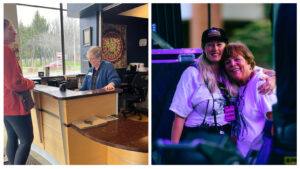
Have any women mentored or inspired you?
René: Yes, several! Two come to mind from my childhood: Anna Morgan and Barbara Bunn. Anna was my friend Annika’s mother and my mom’s best friend; she was also my 5th grade teacher. She wrote a novel in her youth, and today she is one of my best friends and someone I count on to have deeply meaningful conversations. Barbara was like a second mom to me, always encouraging curiosity and taking my whole family on adventures. She went back to school later in life, getting her Ph.D. in chemistry and starting Virginia Tech’s mobile chemistry lab. Both of them showed me the strength, creativity, and determination of women. When I lived in England, I worked for Professor Rosemary Cramp for a year. Rosemary was an archaeologist, responsible for excavating one of the most important early medieval sites in England. The time I spent with her was transformative — I learned so much about research, my place in the academic world, and how to get things done! My friend Susanna Baird also inspires me. She is one of the kindest people I know and one of the most talented, writing beautiful poetry and prose. And then there is my godmother Wanda Worsham, who has been the biggest cheerleader, supporter, and role model to me. She inspires me in so many ways on a daily basis — her favorite comic character is Wonder Woman for a reason! Finally, my mother Joyce mentored me through her constant love and support, even of things that scared her like my love of horseback riding and me living in a foreign country on my own for almost 20 years!
June: I don’t recall anyone mentoring me but I have had other women who definitely inspired me from the time I was a little girl. Golda Meir, Margaret Thatcher and Elizabeth Dole are a few of those women I looked to as having a strong influence in my life as a woman.
Paula: There have been many women who have inspired me over the years and displayed traits that have proven invaluable to me. As I try to choose one or two to list, I find myself thinking of the traits that I admire most in these women such as compassion, strength, drive, collaboration, intelligence, determination, kindness, and many others. I think of the strong core network my mother, grandmother, mother-in-law and aunts provided who raised strong families – instilling values, tenacity, respect and love. I think of teachers who taught not only academics but life lessons. I think of coworkers who have provided strength, support, teamwork, encouragement, and fun! Community and church leaders who have inspired a desire to make a difference, be a voice and step into volunteerism and community development.
Kathryn: I have been inspired by many women. Two being my mother and aunt. Both are strong, resilient women who have, by example. taught me that there is no challenge that is too large to concour. I have also been influenced by my fellow female coworkers at BCM. They tirelessly work to educate, drive, and excel in their departments all while juggling families and personal lives. I am humbled by the perseverance of my BCM family.
Baylor: I feel that many women throughout my life have both mentored and inspired me – starting with my family. My mother was one of six daughters, and my dad had three sisters. Growing up, my Mom and my many aunts constantly supported me and helped show me what it meant to be a strong woman. I have also worked with, and for, many women throughout my career who have mentored me. From my very first job, where my boss took me under her wing and taught me so much more than was required, to female college professors, to women coworkers – I have really been lucky to feel the support of many, many women in my life.
Shauna: Absolutely! I’ve been fortunate to have been surrounded by many inspirational women in my life. Two remarkable individuals immediately come to mind. Firstly, my grandmother, India Gillespie, who is the namesake of my youngest daughter. She embodied intelligence, compassion, humor, and resilience, teaching me invaluable lessons about self-advocacy and standing up for what’s right. Secondly, Judy Franklin remains a cherished figure whom I always considered my guardian angel. Her unwavering kindness, boundless compassion, and generosity left an indelible mark on me, showcasing the profound impact one person can have on another’s life.
Leah: My sister, Sally, has always been an inspiration to me. She has always praised me when she thinks I’ve done good. However, she is quick to point out things that need more thought or could have been done better. She is always telling me she has my back.
Sarah: I’ve been inspired by so many women over the years, but the two that come to mind are my two grandmothers. My Nini, Kathleen. She taught me resiliency, compassion, and how to handle every situation with grace. My Nanny, Phyllis. She taught me to not take things so seriously and life is more fun when you take time to laugh.
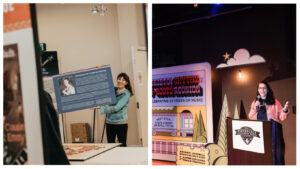
What challenges have you had to overcome as a woman in your role?
René: I think all women face certain gender-based issues to some extent during their professional and personal lives, such as being talked over or dismissed in discussions, assumptions made about their interests or abilities, when asserting yourself is downplayed or criticized as “being emotional,” etc. We are often held to different or higher standards. I feel fortunate to have worked with many wonderful colleagues over the years at BCM where that is thankfully not the norm. I think the biggest challenge in my role as a woman has come from the juggling I do between work and home — while I am not a mother, I have helped with parental caregiving over the last several years (a role that more often falls on women), and this can make work-life balance even harder than it already is when work is the only thing on your plate.
June: I don’t really recall any real challenges as a woman in my current role. I will say that throughout my life, there have definitely been times when I was talked “down to” by men because I am a woman. My father was a very strong influence in my life and he always encouraged me to be independent in my thinking as a woman, especially. I will always be grateful to have had a father who guided me in the direction that gave me encouragement to make the right choices and speak up for myself, no matter what.
Paula: Having worked in both the manufacturing and non-profit environments as a woman, there have been challenges. I have always searched for avenues to change perceptions, earn respect and make a difference in whatever environment I find myself a part. After all, it is the challenges that make you stronger.
Kathryn: Oftentimes a woman’s voice is stifled due to our soft spoken nature. Feeling heard and respected professionally can be a challenge at times. However, I look forward to a future where gender, race, and lifestyle choices are not judged nor are subject to preconceived notions.
Baylor: Thankfully, I feel the majority of the challenges that have come with my position have been more about understanding and executing the full scope of my work than it has been about the fact that I am a woman in this field. With that being said, I am not immune to the gender-based issues that many women face on a daily basis. Much of the work I do takes place in more male-dominated spaces, and so learning how to work within that environment can definitely be challenging. I have to give a shout out here to my Dad – I grew up working alongside him on our family farm, and never once do I remember him making me feel as if I couldn’t/shouldn’t be doing the work because I was a woman. I remember going to other farms, and people being surprised he brought his daughter, but he always just responded with “she’s the best cattle hand there is.” Make no mistake – I was not the best cattle hand there was! I know that now, but at the time I just felt proud and strong. I think having that type of support from a young age has helped me feel more confident throughout my career and definitely contributes to me not being as intimated when I’m in a situation where it’s recognized I’m a woman. Becoming a mother also presented additional challenges – trying to shift the balance to manage an already full workload and add in the new position as Mom has been extremely challenging, but rewarding!
Shauna: Regardless of the role or workplace, navigating the challenges as a woman in the workforce is always significant and diverse. I’ve encountered numerous situations where I’ve sat at tables dominated by men, offering answers to questions or solutions to problems only to be talked over or disregarded entirely. However, I’ve learned not to let these obstacles hinder me. I make a point to assert myself—I answer the questions, provide solutions, reiterate if not acknowledged, and ensure my voice is heard even if I’m interrupted.
Leah: I have faced many challenges in my career, but I have always ignored or overcome them.
Sarah: I think women are often underestimated. This is something I use as motivation to exceed expectations, but I also think it highlights the importance of advocating for yourself and other women.
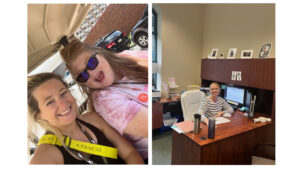
What is your favorite part of your job?
René: There are several things that I really love about my job. Firstly, I love the people I work with, and I am so proud of my team and all that they do each day. Secondly, it means a lot to me to be part of an organization that directly serves our community — from education and exhibits to the preservation of history. And on a personal level, I love being in a job where I get to learn all the time!
June: I love welcoming all our visitors! I have the privilege of meeting some of the most interesting people in the world. I also enjoy working with the wonderful artisans from our region.
Paula: My favorite part of working for BCM is that I am really working for the whole Bristol Community. Bringing new people to Bristol to discover the hidden treasure of our town. Imparting the proud heritage of the deep musical history to museum visitors and educating the next generation. Watching the crowds of people who come to Bristol Rhythm and Roots Reunion and LOVE our festival – and that I get to help organize and curate this event! Listening to Radio Bristol broadcast, educate and entertain a worldwide audience – that’s pretty special. But I have to say that I am blessed to work with a group of amazing people that are all driven by a passion and love for what they do and the organization they represent – that is priceless.
Kathryn: The most favorite part of my job is working with a team that is so passionate and forward thinking. Feeling support from your fellow co-workers is so inspirational. I feel very honored being a part of the Birthplace of Country Music!
Baylor: My favorite part of my job, and one of the most challenging aspects, is how it is constantly shifting. My days are never “status quo” types of days. I feel like I’m constantly getting presented with new puzzles to figure out. BCM has so many things going on all the time and I enjoy the “chaos” of working in an environment like that. It can be difficult to balance all of the moving parts, but it is never boring!
Shauna: Working at the Birthplace of Country Music offers numerous rewarding experiences. One of my favorite moments is strolling down State Street during Bristol Rhythm & Roots, witnessing thousands of people enjoying themselves, and realizing that the year-long effort was truly worthwhile. I also feel immense pride when I see elementary students learning about our region’s rich history at the Museum or witness Radio Bristol producing another successful Farm and Fun Time event. What I cherish most about my role here is knowing that my time and effort aren’t just about earning a paycheck; they’re about contributing to programs and creating experiences that significantly impact our community and region.
Leah: My favorite part of my job is working with people in the community. I have been fortunate to have been able to meet so many people in my years with BCM who have become lifetime friends and mentors to me. My wish is that I always treat people with respect.
Sarah: My favorite part of working at BCM is throwing live events. Bristol Rhythm & Roots is my favorite weekend of the year! Every morning, I drive to work down State Street and dream of the thousands of music fans crowding the streets. I take a lot of pride in knowing we’re responsible for carrying on such a sacred tradition.
If you had unlimited resources, what would your dream project be for BCM?
René: My dream project is actually one that I hope we will be able to accomplish one day — to have a Smithsonian SparkLab! as part of the museum. This would enable us to serve K-12 and families with STEAM-based activities, resources, and fun learning opportunities in really meaningful and engaging ways. Plus, it would just be super cool!
June: I would like to see the Museum become fully accessible to all physical and mental disabilities. For example, those who are blind or visually impaired and those without hearing or with hearing loss. And along with the physical disabilities, it would be so helpful to have chair lift transportation for when the elevator is out of order.
We could always use more storage space, especially for The Museum Store. We currently have a tiny closet that is very limited with its layout for storage of back stock and supplies for the store.
As much as I love our Performance Theater, it would be wonderful to have our own much larger theater also, to host bigger shows without having to utilize outside sources.
Paula: My dream for BCM is to be that organization with unlimited resources! If this staff and volunteers can produce what is produced with the limited resources that are available, what the future for the organization and the Bristol community would be with more robust resources would be amazing. Truly, my dream would be that the organization have an endowment program in place that would secure the future of the organization for perpetuity – to know that the Museum, Festival and Radio would continue and grow for many generations. Leaving the legacy of the past with the ability to build and expand toward the future is truly what makes BCM so special.
Kathryn: A dream project for BCM would be the ability to provide travel exhibits to our regional school systems. Allowing the exhibits to come to schools rather than have the children travel would be amazing, as bus transportation has become so difficult for school systems.
Baylor: If I had unlimited resources, a dream project for me would be for BCM to travel! I would love to see BCM collaborate on and produce events all over the country. I love the idea of a “Brought to You by the Birthplace of Country Music” type of project that would reach different audiences and demographics and give us different platforms to share our story.
Shauna: I have numerous dreams for our organization, and it’s challenging to pick just one. One dream that’s coming to fruition is our event on June 1st featuring Dwight Yoakam, which I’m incredibly excited about. Another major dream project is the completion of the Museum Expansion, as I believe it will have a profound and positive impact on our community.
Leah: If I had unlimited resources (money), I would build an endowment for BCM so that we could have the staff we need to do all the things we dream about doing. For example, a robust education department, complete renovations of the Joe & Cindy Gregory Building for the expansion of the Museum, and increase the number of staff where needed, just to name a few. In closing, I would say that I have been blessed to be able to be with the organization for many years. It is an honor and a sense of pride for me because I love and believe in the work that we do each and every day every day.
Sarah: If I had unlimited resources, my dream would be to grow our team!